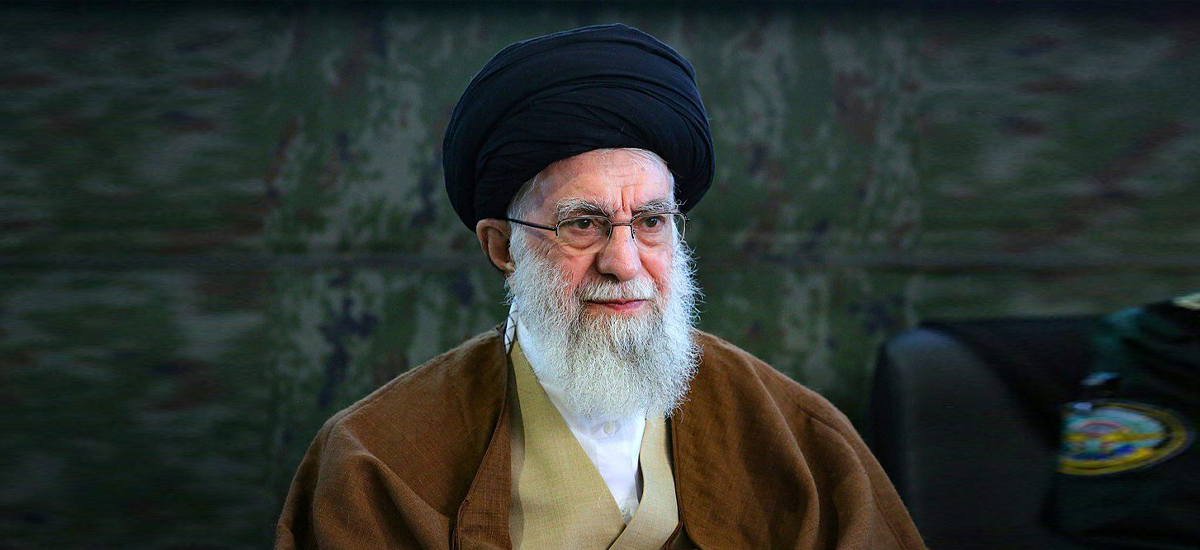
Tehran — Iran has officially confirmed that Supreme Leader Ayatollah Ali Khamenei was killed in joint U.S.–Israeli airstrikes, marking a dramatic escalation in tensions across the Middle East. The announcement was made on state television, where a visibly emotional presenter declared 40 days of national mourning.
Earlier, Iranian state media reported that several members of Khamenei’s family — including his daughter, son-in-law, grandchildren, and a daughter-in-law — were also killed in the attacks.


U.S. President Donald Trump announced Khamenei’s death on social media, describing the strike as “justice” for the Iranian people, the American people, and many around the world. Trump stated that the bombing campaign would continue and called it “the only opportunity for the Iranian people to take back their country.”
Regional Retaliation
In response to the U.S. and Israeli strikes, Iran launched retaliatory attacks across the Middle East. Reports indicate that Iranian forces targeted American military bases in Dubai, Doha, Bahrain, and Kuwait.
In Doha, explosions were reported near the Al Udeid Air Base, the largest U.S. military installation in the region. Reuters reported that U.S. air defense systems intercepted and shot down a drone near a U.S. base in Erbil, Iraq.
Jordan, which shares a border with Israel, said its armed forces intercepted and destroyed two ballistic missiles entering its airspace.
In the United Arab Emirates, an explosion struck the Fairmont The Palm hotel in Dubai. Authorities said the blast occurred in a building in the Palm Jumeirah area, injuring at least four people.
Rising Casualties
According to the Red Cross, more than 200 people have been killed in Iran following the U.S. and Israeli strikes. Iranian media reported that at least 85 people were killed when a girls’ school was hit during the bombardment.
The scale of casualties and the targeting of civilian areas have intensified international concern over a broader regional war.
Khamenei’s Legacy
Khamenei was Iran’s second Supreme Leader following the 1979 Islamic Revolution. He assumed the position in 1989 after the death of Ruhollah Khomeini. Over more than three decades in power, Khamenei shaped the ideological and political direction of the Islamic Republic, consolidating authority through the Office of the Supreme Leader and maintaining a hardline stance on domestic governance and foreign policy.
Having held power for nearly four decades, Khamenei was considered the most powerful figure in Iran, with ultimate authority over the military, judiciary, and key state institutions.
The developments mark one of the most consequential moments in modern Middle Eastern history, with global leaders urging restraint amid fears of a wider conflict.