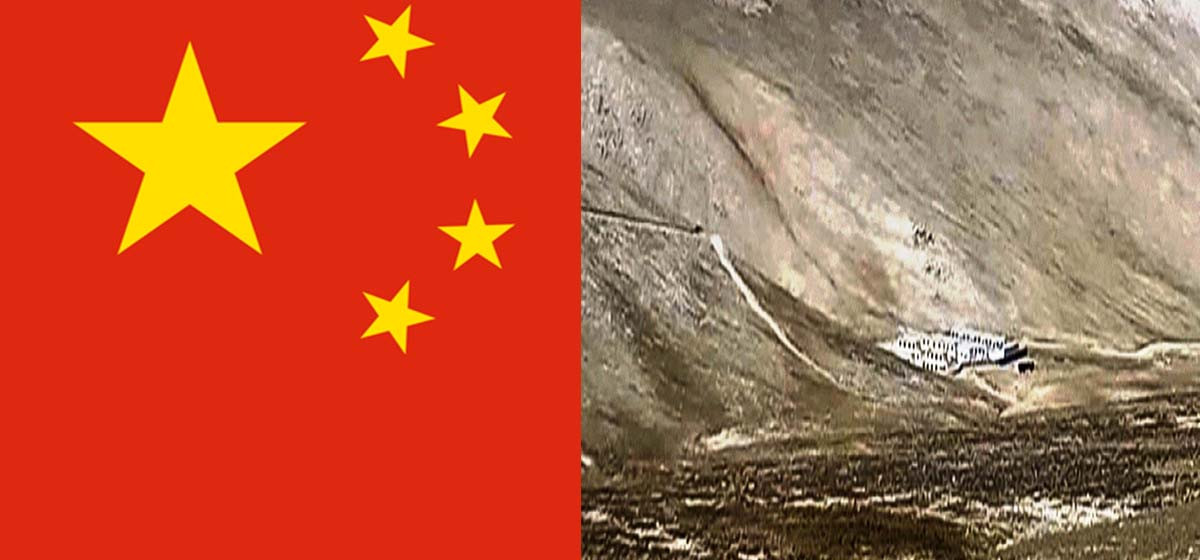
Simkot. Neighboring China has adopted a policy of non-cooperation after the fact that the Humla border was crossed. In order to take revenge on the people of the border area, China has hurt Nepalis by tightening the checkpoints. Around 7,000 people of Humla have lost their livelihood.
Overwhelmed by this, Humli has demanded the operation of the northern Hilsa border crossing of Humla, which is connected to China. Hoteliers of the district and locals of North Namkha village have requested the district administration office to operate the border checkpoint to ease the Hilsa checkpoint which has been closed for the past two years. Chairman of the hotelier Meem Bahadur Lama informed.

Chairman Lama said that small, medium and large businesses were in financial crisis due to the closure of the border. He urged the government through the district administration to take necessary steps to open the border crossing to China from Hilsa.
Their investment is in crisis as the hotel business opened at Naka has come to a standstill. Trade in Humli has come to a standstill after the Hilsa border area was closed. When the Hilsa border was closed, more than 7,000 people from Humli, who had been working in Taklakot, China, lost their jobs.
Citizens of North Namkha Municipality and other municipalities used to reach Takla for employment by opening the checkpoint which was blocked by snow since the end of April. But Namkha, which has been self-sufficient in China for the past two years, is facing more problems when the local border is closed.
Tamang, a local from Namkha, said that there was a problem with the closure for a long time even though he would return to Nepal after working in Taklakot from April to the end of November. Although he returned to Humla after working in China for about eight months, he said that Humli had problems in running its household expenses due to the closure of the border due to corona.
China has refused to open the border by showing Corona. On top of that, Namkha is a place where China has crossed the border. Northern Namkha is dependent on China. Citizens of Simkot, Kharpunath and Sarkegad villages also used to earn good money by reaching Taklakot. Tamang said that the corona created more problems when China did not want to open the border.
Locals have complained that trade and business has come to a standstill after the closure of Hilsa Naka and they have not been able to consume cheap and comfortable consumer goods during big chard festivals like Dashain and Tihar. Similarly, the price of Khasi has skyrocketed in Humla after the border was closed for two years and Chinese cannabis did not enter.
The price of khasi has skyrocketed in the last decade after the movement in the border hills was completely stopped. In Humla, which has seven village municipalities, it will be ten times more expensive this year. Humli has to pay a high price for the khasi in the local village as the Hilsa border with China has not been reopened.
Due to the arrival of Chinese Changra in the Dashain of each year last year, the Dashain of Humli, which celebrates Dashain cheaply, has become more expensive this Dashain of this rainy season. Dhan Bahadur Bhandari of Simkot-2 said that the price of changra from China used to be up to Rs 10,000 in Humla two years ago but it used to be up to Rs 30,000 when buying local khasi.
Traders have been saying that the price of local khasi has gone up this year as there is no other option. Traders have started selling khasi from Bajhang and Bajura for decades as Chinese changra has not arrived. The meat is being sold at Rs 1,000 per kg in Simkot, the district headquarters of Humla.