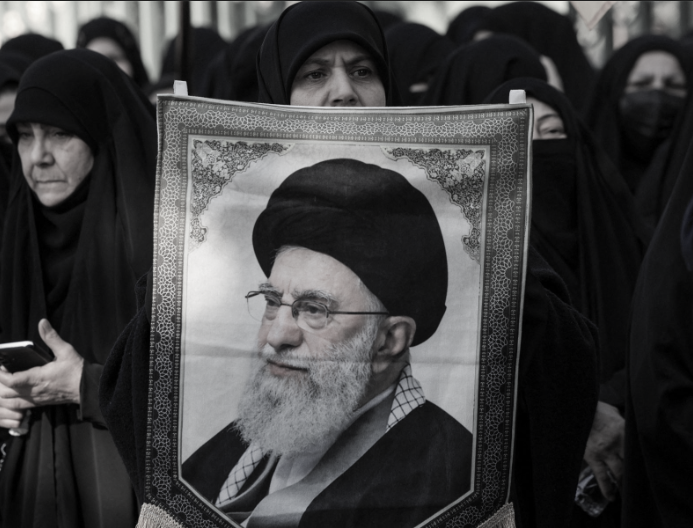
Tehran — The Iranian government has announced 40 days of national mourning following the death of Supreme Leader Ayatollah Ali Khamenei. According to Iranian state media cited by international news agencies, the decision reflects Shia Islamic tradition, in which the 40th day after a person’s death is considered especially sacred.
Khamenei was reportedly killed during a joint U.S.–Israeli attack. The Office of the Supreme Leader said a nationwide mourning period has been enforced, with flags to be flown at half-mast on government buildings and memorial ceremonies to be held across the country. His death marks the end of a 37-year chapter in the leadership of the Islamic Republic.


Khamenei had served as Iran’s Supreme Leader since 1989, succeeding Ruhollah Khomeini, the founder of the Islamic Revolution. His tenure was widely known for its firm stance against Western powers. Iran’s official news agency reported that he was killed Sunday morning while in his office.
An official Persian-language social media account described his death as the “ultimate sacrifice” for the nation’s sovereignty, quoting a verse from the Holy Quran.
Earlier, Israeli media outlets, citing Iranian sources, reported that Khamenei’s daughter, grandson, daughter-in-law, and son-in-law were also killed in the U.S.–Israeli strikes.
Meanwhile, reports have emerged of small groups celebrating in certain Iranian cities. International media have published footage showing anti-government slogans being chanted and some people taking to the streets in apparent celebration.
Iranian activist and journalist Masih Alinejad described the incident as a historic moment in a video shared on social media. Exiled Crown Prince Reza Pahlavi urged Iranians to unite in support of a stable transition toward a free and prosperous future, claiming that any attempt by the current establishment to appoint a successor would ultimately fail.
U.S. President Donald Trump also asserted on social media that Khamenei had been killed, calling it “justice” for the Iranian people. He stated that targeted operations would continue until peace is established in the Middle East.
Amid ongoing hostilities, analysts suggest that the process of selecting a new Supreme Leader could prove highly challenging. Questions remain over whether the country’s religious establishment will maintain primary control or whether the influence of the Islamic Revolutionary Guard Corps will expand, shaping Iran’s political future during a time of conflict.